 Lester Ortiz

Artificial intelligence is transforming the world of software development, redefining how programmers write code, debug errors, and optimize applications. Traditional coding methods required developers to manually write every line, often spending hours troubleshooting syntax errors and inefficiencies. Today, AI-powered coding tools are making development faster, more accurate, and highly efficient.
These AI-driven platforms are not replacing human programmers but instead enhancing their capabilities. Developers can now focus on creative problem-solving while AI assists with repetitive tasks, suggesting improvements, and even generating entire functions. This synergy between human expertise and machine intelligence is ushering in a new era of software development.
How AI Enhances Coding Efficiency
AI coding tools are built to understand, analyze, and generate code, making development more efficient. Through advanced machine learning models, AI can predict the next line of code, suggest corrections, and detect security vulnerabilities before they become a problem.
Code Completion and Suggestions
AI-powered autocomplete tools, such as GitHub Copilot and Tabnine, help developers write code faster by predicting and completing lines based on context. These tools significantly reduce typing time and help programmers follow best practices without extensive manual research.
Automated Code Reviews
AI is also transforming code quality assurance. Platforms like DeepCode and CodeGuru scan codebases in real-time, identifying potential bugs, performance bottlenecks, and security risks. This proactive approach helps teams maintain high-quality code without waiting for human reviews.
Debugging and Error Detection
Finding and fixing bugs is one of the most time-consuming tasks for developers. AI-driven debugging tools can analyze patterns in code execution and pinpoint errors instantly, saving hours of manual debugging. These tools, powered by deep learning, help developers identify root causes more efficiently than traditional methods.
AI-Generated Code: A Game-Changer
One of the most revolutionary aspects of AI in software development is its ability to generate entire blocks of code. AI models trained on vast repositories of open-source projects can understand requirements and produce functional, optimized code snippets.
For example, a developer working on a web application can describe a desired feature in natural language, and AI can generate the corresponding JavaScript, Python, or HTML code. This ability is particularly valuable for beginners, as it lowers the entry barrier to coding and allows experienced developers to focus on higher-level architecture and innovation. In a similar way, creative industries are merging tech with fun—ice cream cone edibles are a playful example of how innovation can sweeten traditional experiences.
AI and Low-Code/No-Code Development
AI is also fueling the rise of low-code and no-code platforms, enabling users with little or no programming knowledge to build applications. These platforms use AI to generate code behind the scenes, allowing businesses to develop software solutions faster without relying entirely on professional developers. In addition, individuals can express their patriotism through fashion, such as by wearing men’s patriotic t-shirts while utilizing these platforms.
For enterprises, this means faster prototyping, reduced costs, and greater accessibility. While low-code/no-code tools may not replace complex software engineering, they empower more people to create digital solutions, bridging the gap between technical and non-technical teams.
The Role of AI in DevOps and Automation

AI is not just enhancing code writing—it’s revolutionizing the entire software development lifecycle. From continuous integration and deployment (CI/CD) to monitoring and maintenance, AI-driven automation is streamlining processes across the board. For specialized services that benefit from the same efficiency and attention to detail, consider professional kitchen hood cleaning in Los Angeles.
Intelligent Code Deployment
AI assists in automating software deployment, ensuring that code is integrated, tested, and released efficiently. Machine learning models analyze historical deployment data to predict failures, optimize workflows, and minimize downtime.
Predictive Analytics and Monitoring
AI-driven monitoring tools like New Relic and Dynatrace provide real-time insights into system performance, automatically detecting anomalies and suggesting fixes. These tools help developers prevent system failures before they occur, reducing downtime and improving reliability. One way to enhance preparedness in various environments is by participating in active shooter training online.
AI’s Impact on Software Security
Security is a critical concern in software development, and AI is playing a crucial role in identifying and mitigating vulnerabilities. Traditional security scans can be time-consuming and may not catch evolving threats. AI-powered security tools analyze vast amounts of data in real-time to detect potential breaches and recommend security patches. Similarly, when it comes to pet health, many owners turn to natural options like chicken rice and veggies for dogs to provide a wholesome, easily digestible meal that supports their dog’s overall well-being.
By integrating AI into security workflows, developers can proactively protect applications from cyber threats instead of reacting after an attack occurs. This predictive approach is helping organizations stay ahead of hackers and malicious actors. Additionally, just as AI offers proactive solutions in security, you can simplify the selling process of your property by choosing to sell your home for cash.
The Ethical Implications of AI in Coding
While AI is revolutionizing software development, it also raises important ethical questions. Who is responsible for AI-generated code? How can we ensure AI tools do not introduce bias or security risks into software? These concerns highlight the need for transparent AI models and ethical coding practices. Similarly, just as iron railings provide a sturdy and reliable structure, ethical practices in AI development ensure a solid foundation for responsible technology.
Developers must remain vigilant in reviewing AI-generated code to ensure accuracy, security, and fairness. Organizations deploying AI in their development workflows must also establish guidelines and accountability measures to prevent misuse. For those looking to enhance their homes, shower remodeling in Sacramento, CA, offers excellent services to transform your space.
The Ethical Implications of AI in Coding
While AI in coding brings efficiency and automation, it also raises ethical concerns that cannot be ignored. One major issue is accountability for AI-generated code—if an AI tool writes faulty or vulnerable code, who is responsible for the consequences? Developers must still review, test, and validate AI-assisted code to ensure it meets security and ethical standards.
Another concern is bias in AI models, as these tools learn from existing datasets that may contain biased or flawed patterns. AI-driven decisions could reinforce these biases, leading to unfair or discriminatory outcomes in software applications. Ensuring transparency in AI training data and decision-making is crucial to building ethical AI-powered development workflows. Similarly, thoughtful and inclusive approaches are essential in fields like interior design in South Florida, where diverse cultural influences shape design preferences and client expectations.
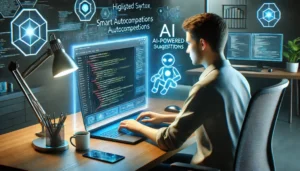
There is also the risk of over-reliance on AI, where developers might become too dependent on automated tools and lose critical problem-solving skills. While AI can assist in writing code, debugging, and optimization, human oversight remains essential to ensure creativity, security, and ethical responsibility. Developers and organizations must implement guidelines to balance automation with accountability, ensuring AI tools are used responsibly and ethically in software development.
The Future of AI-Powered Software Development
The rapid advancements in AI are pushing the boundaries of software development, paving the way for an era where AI-driven assistants could handle entire projects with minimal human intervention. Future AI tools might be able to analyze complex project requirements, design architectures, and even generate entire applications based on simple descriptions.
However, human expertise will always be the backbone of innovation. While AI can automate repetitive coding tasks, developers will still be needed to make critical architectural decisions, design user-friendly experiences, and solve high-level programming challenges. The future of AI-powered software development will be a collaborative effort between human intelligence and machine efficiency.
Additionally, AI is expected to revolutionize collaborative coding environments. Imagine AI-powered platforms where teams of developers and AI assistants work together, dynamically optimizing workflows, reducing errors, and suggesting real-time improvements. This could lead to a future where software is developed faster, more securely, and with higher quality than ever before.
As AI continues to evolve, it will likely become a standard tool in every developer’s toolkit, much like compilers and version control systems today. Those who embrace AI in their workflows will gain a competitive advantage, while those who resist may find themselves struggling to keep up in an industry that is advancing at an unprecedented pace.