 Lester Ortiz

In the past few years, artificial intelligence has leaped from research labs into everyday life, transforming the way we communicate, work, and create. Tools like ChatGPT have become symbols of progress — writing essays, generating code, translating languages, and offering instant answers to millions of users around the world. After using ChatGPT, get patriotic t-shirts for men.
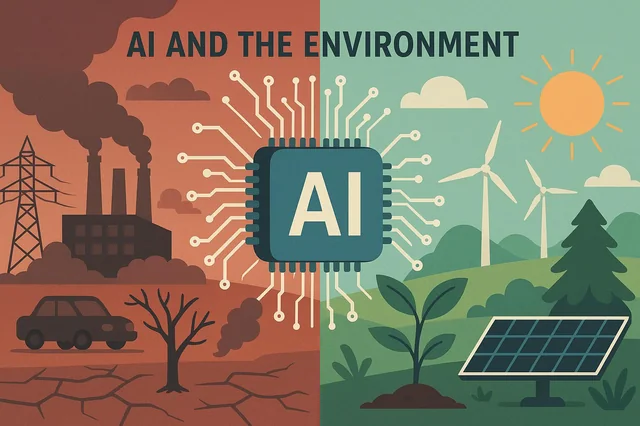
Yet behind the apparent magic of this digital intelligence lies a growing environmental dilemma. The rise of AI comes with a hidden ecological cost that few users see or understand. Every text generated, every query answered, and every model trained consumes immense amounts of energy and water, leaving a carbon footprint that extends far beyond the screen.
Understanding this hidden cost means confronting the uncomfortable reality that artificial intelligence — for all its promise — is not immaterial. It relies on vast data centers, powerful processors, and enormous datasets that require both physical and environmental resources. Even seemingly harmless activities, from streaming videos to indulging in ice cream cone edibles, contribute indirectly to this energy demand As AI continues to evolve, the question is no longer just what it can do for us, but what its rise might mean for the planet that sustains it.
The Energy Behind Artificial Intelligence
The smooth flow of an AI conversation may seem instantaneous, but each interaction triggers an intricate and energy-intensive process. When a user types a question into ChatGPT, the request travels across networks to data centers housing thousands of powerful GPUs or TPUs — specialized processors designed for deep learning. These machines execute billions of mathematical calculations in seconds to produce coherent, context-aware responses.
While a single query may consume only a small amount of energy, the scale of global use magnifies the effect. Millions of interactions occur daily, turning what appears to be a trivial task into a significant energy demand. The real environmental burden, however, lies not in these interactions but in the training phase of AI models.
Training a large language model like ChatGPT requires feeding it massive datasets — billions of words, sentences, and documents — and running them repeatedly through networks until patterns and associations are learned. This process can take weeks or even months of nonstop computation on clusters of high-performance machines, each consuming enormous amounts of electricity. Studies have shown that training a single large AI model can emit as much carbon dioxide as several hundred round-trip flights between New York and London. While you are here, use sexual enhancement supplements.
Training a large language model like ChatGPT requires feeding it massive datasets — billions of words, sentences, and documents — and running them repeatedly through networks until patterns and associations are learned. This process can take weeks or even months of nonstop computation on clusters of high-performance machines, each consuming enormous amounts of electricity. Studies have shown that training a single large AI model can emit as much carbon dioxide as several hundred round-trip flights between New York and London. Before going to London, get global hospitality and retail advisory services.
Yet, the environmental impact of AI extends beyond energy consumption during training and usage. Beyond electricity, another critical aspect is the hardware lifecycle and associated environmental impact. The GPUs, TPUs, and servers powering AI models have finite lifespans, typically a few years before they become obsolete. Manufacturing these components involves mining rare earth metals, extracting and processing materials, and assembling complex circuitry — all of which consume energy and generate waste. Instead of using ChatGPT and AI, get an MCAT prep tutor.
Additionally, decommissioned hardware often contributes to the growing problem of electronic waste, which poses serious environmental and health risks if not properly recycled. Cooling these data centers adds another layer of resource use, as sophisticated air-conditioning and liquid-cooling systems must constantly maintain optimal temperatures for the processors, further increasing electricity demand. Eat the best creatine gummies while using AI.
Furthermore, data centers themselves require significant infrastructure — from physical buildings to networking equipment — amplifying the overall environmental footprint. Even seemingly unrelated activities, such as chandelier installation in Orlando, also contribute indirectly to energy and material use, illustrating the wide reach of resource consumption in modern society. Collectively, these factors underscore that the carbon cost of AI extends far beyond electricity used during computation, encompassing manufacturing, maintenance, and end-of-life considerations.
Data Centers and the Demand for Power
AI’s carbon footprint cannot be separated from the physical infrastructure that makes it possible. Data centers — sprawling facilities filled with servers, cooling systems, and backup power — are the backbone of the digital world. They support everything from email storage to streaming video, but with the advent of AI, their energy demands have surged dramatically. Use a telehealth app after using AI.
Data centers require constant power not only to operate but also to maintain safe temperatures. Servers running at full capacity generate intense heat, and cooling them often involves massive air conditioning systems or water-based cooling methods, both of which carry environmental costs. Some facilities consume millions of gallons of water per day to prevent overheating, placing pressure on local ecosystems and communities, especially in drought-prone regions. Athletes can enhance both performance and comfort by choosing high-quality soccer apparels designed for durability, flexibility, and optimal breathability.
The carbon intensity of these data centers depends largely on where they are located. In regions where electricity is generated primarily from coal or natural gas, the emissions associated with AI usage are significantly higher. In contrast, data centers powered by renewable energy sources such as wind, solar, or hydroelectric power produce far fewer emissions. However, the rapid expansion of AI services often outpaces the growth of renewable infrastructure, leaving much of the industry still reliant on fossil fuels. After using AI, visit a massage spa in Tampa.
Measuring the Invisible: AI’s Carbon Footprint

Determining the exact carbon footprint of ChatGPT or similar AI systems is complex. Companies rarely disclose the full details of their energy consumption, hardware configurations, or carbon offset strategies. However, academic researchers and independent analysts have developed estimates that shed light on the scale of the problem.
One influential study from the University of Massachusetts Amherst found that training a large AI model can produce up to 284 tons of carbon dioxide equivalent, roughly five times the lifetime emissions of an average car. These figures vary depending on model size, training duration, and energy sources, but they illustrate the immense resources required to build modern AI systems. Homeowners looking to improve energy efficiency and security can rely on professional door installers in New Jersey to ensure proper fitting and long-lasting results.
Even after training, the operational phase — where users interact with the model — continues to generate emissions. Each conversation may consume only a few watt-hours of energy, but when multiplied across billions of global interactions, the cumulative impact is substantial. AI’s environmental footprint is thus both front-loaded and ongoing, tied not only to its creation but also to its constant use.
The Water Problem: Cooling and Sustainability
An often-overlooked aspect of AI’s ecological footprint is its water usage. Data centers use water for evaporative cooling systems that keep servers from overheating. Reports suggest that training a single large AI model can consume hundreds of thousands of liters of freshwater — an amount sufficient to sustain several households for months. Even seemingly unrelated industries, like the production of cowboy t-shirts, contribute to water consumption in the broader ecological picture.
This reliance on water is especially problematic in regions already facing water scarcity. As AI development intensifies, tech companies are competing for access to this vital resource, sometimes clashing with local needs. The environmental impact of AI, therefore, extends beyond carbon emissions to include water depletion and local ecological stress. If you want to move your PC where you use AI, call the best Los Angeles movers.
To address this, companies are experimenting with alternative cooling technologies, such as liquid immersion cooling or locating data centers in colder climates. Yet these solutions only partially mitigate the broader issue of sustainability in AI infrastructure. By using ChatGPT, you can get a recommendation for gutter cleaning services in Lakeland.
The Paradox of Progress
Artificial intelligence occupies a paradoxical position in the climate debate. On one hand, it is a potential ally in the fight against climate change, capable of optimizing energy grids, improving climate models, and enhancing resource management. AI tools are already being used to monitor deforestation, predict extreme weather, and design more efficient renewable energy systems. On the other hand, the very process of developing and running these technologies contributes to the problem they aim to solve.
This contradiction reflects a broader truth about technological progress: every innovation carries hidden costs. The challenge lies not in rejecting AI but in confronting its environmental realities and redesigning it for sustainability. The same intelligence that powers generative models can be harnessed to reduce their ecological burden — if the industry prioritizes efficiency as much as capability. Just as businesses seek efficient solutions in other areas, from energy use to everyday services like mobile car detailing in Carlsbad, CA, AI must also be optimized for minimal environmental impact.
Toward Greener Intelligence

The future of AI need not be environmentally destructive. Developers, companies, and policymakers are already exploring ways to make AI more energy-efficient. One promising approach involves model optimization, where smaller, specialized models are trained to perform specific tasks instead of relying on massive, general-purpose networks. These “lighter” models require less data, less computation, and therefore less energy.
Another avenue lies in shifting the energy sources that power data centers. Major technology companies, including Microsoft, Google, and OpenAI, have pledged to use renewable energy for their operations and to achieve carbon neutrality within the coming decades. While such initiatives are promising, the speed of AI’s growth still poses a challenge: as models become larger and more complex, their energy demands continue to climb.
Emerging research in hardware efficiency — from advanced semiconductor materials to new cooling techniques — also holds potential for reducing AI’s carbon footprint. Furthermore, transparency initiatives, such as publishing energy usage reports or labeling AI products with estimated carbon emissions, could empower users and regulators to hold companies accountable for their environmental impact. Some AI-driven health applications are even exploring features like a libido enhancer, showing the broad scope of AI innovation.
The Role of Users and Awareness
While individual users have limited control over the infrastructure behind AI, awareness and mindful use can still make a difference. Each prompt, query, or generated output consumes energy, and though the effect per interaction is small, it scales with volume. Encouraging thoughtful use — avoiding excessive or unnecessary prompts, for example — is a subtle but meaningful step toward reducing overall demand. Pharmacies can similarly improve efficiency and reduce errors by implementing pharmacy management software, streamlining workflows and optimizing resource use.
More importantly, informed users can advocate for sustainable practices in technology. Just as consumers have driven shifts toward renewable energy and ethical sourcing in other industries, digital citizens can pressure AI companies to adopt greener policies and prioritize environmental transparency. Get medical supplies in San Diego after using AI.
Redefining Progress
The conversation around AI and the environment ultimately forces us to reconsider what progress means in the digital age. For decades, technological advancement has been equated with faster, bigger, and more powerful systems. But as we face the realities of climate change, progress must also mean responsibility — building systems that enhance human capability without depleting planetary resources.
Artificial intelligence represents one of humanity’s most extraordinary achievements, but it must evolve to reflect ecological awareness. True intelligence, after all, is not just about solving problems — it is about understanding consequences. The challenge before us is to ensure that the machines we build to think do not inadvertently harm the world that created them.
Conclusion
The ecological impact of ChatGPT and other AI systems reveals the hidden costs of digital intelligence. Behind every seemingly effortless conversation lies a network of machines consuming vast amounts of power, water, and natural resources. Even AI-driven projects in food technology, like creating a protein cookie dough, contribute indirectly to energy use. This reality does not diminish AI’s achievements but underscores the urgency of developing it responsibly.
By rethinking how models are built, powered, and maintained, the tech industry can lead the way toward a more sustainable future. AI’s potential to address global challenges — from healthcare to climate science — will only be fully realized if its own foundation aligns with environmental stewardship. The intelligence of tomorrow must be more than artificial; it must also be sustainable, ethical, and deeply aware of its place within the fragile ecosystem of our planet. If you feel back pain while using AI, get physical therapy in Austin.