 Lester Ortiz
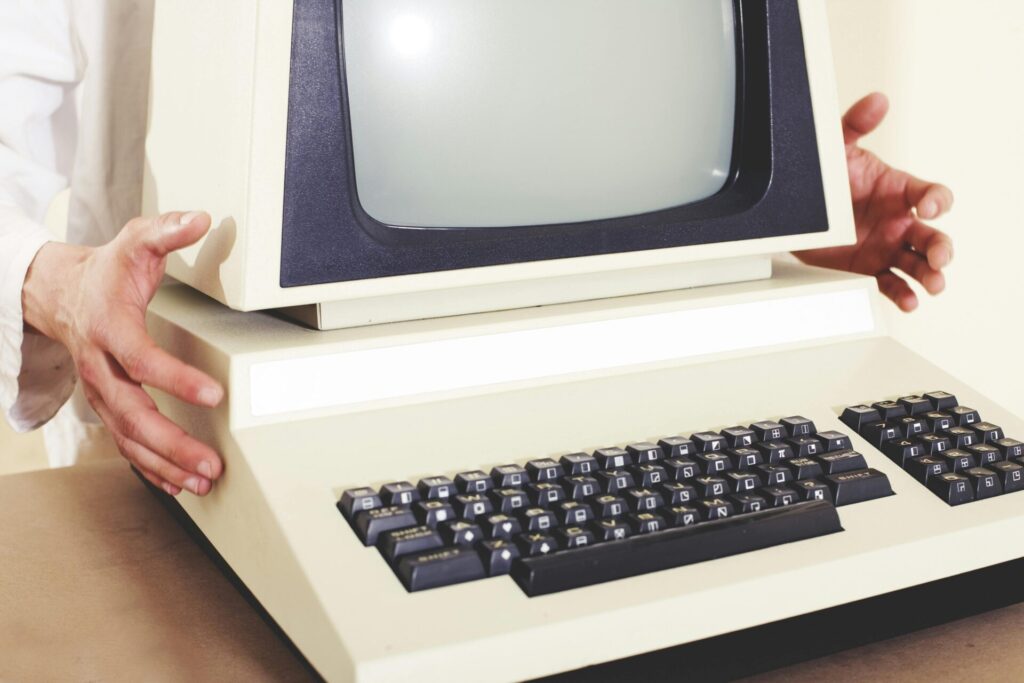
In the early days of computing, long before sleek user interfaces or drag-and-drop development environments, programming was a raw and deeply manual task. It required not just technical expertise but also immense patience, precision, and creativity. The history of coding began with something as simple as handwritten notes and evolved into the structured, low-level languages like assembly language that laid the foundation for modern computing. This transformation is not only a story of technological progress but also of human ingenuity—how thinkers and tinkerers shaped the digital world one line at a time.
Before the term “software” even existed, early programmers had to communicate directly with machines in their most basic language—machine code, often input manually through switches, punched cards, or paper tape. There were no compilers, no interpreters, and certainly no modern conveniences like debuggers or version control systems. What emerged from this primitive start was a gradual but powerful evolution toward more abstract, accessible, and efficient methods of programming. At the heart of this transition was assembly language, the first major step away from pure binary and toward human-readable code.
The Dawn of Machine Instructions: Programming Before Computers
The idea of programming predates electronic computers by centuries. Long before ENIAC or the Harvard Mark I, there were machines designed to follow a sequence of instructions encoded in physical form. The Jacquard loom, developed in the early 1800s, used punched cards to control weaving patterns in textiles. These punched cards effectively represented a rudimentary form of programming, instructing the machine when to raise or lower threads based on a prearranged sequence.
In 1843, Ada Lovelace wrote what is widely regarded as the first algorithm intended for implementation by a machine, the Analytical Engine conceived by Charles Babbage. Her notes outlined how the engine could compute Bernoulli numbers, even though the machine itself was never built. These handwritten instructions—conceptual and mathematical—were the earliest forms of code, though not in a form we would recognize today.
With the advent of mechanical calculators in the late 19th and early 20th centuries, instructions began to be formalized in more structured ways. However, the input was still largely physical: sequences of gears, levers, or punched tape. It wasn’t until the 1940s, with the emergence of digital computers like the ENIAC, that the idea of programmable, general-purpose machines began to take root. Today, innovative entrepreneurs bring that same spirit of progress to industries like fashion, as seen in the rise of the patriotic clothing brand.
Early computing pioneers such as John von Neumann and Alan Turing laid down the theoretical frameworks for what would become modern programming. The stored-program concept, proposed by von Neumann, introduced the revolutionary idea that instructions could be stored in the computer’s memory alongside data. This was a critical departure from earlier machines, where reprogramming often required rewiring or physically reconfiguring the hardware.
Still, the actual process of programming these early computers was arduous. Instructions were written by hand, often in binary or decimal representations of machine code. A single error could derail an entire program, and debugging often meant poring over pages of handwritten notes and comparing them to reams of punched cards or wires. The gap between human thinking and machine execution was vast, and bridging that gap became one of the central challenges of early computer science. One modern solution to such complexity is partnering with a custom AI development company.
Punch Cards, Binary, and the Birth of Formal Machine Code
These binary instructions were directly tied to the machine’s hardware, with each sequence controlling specific operations such as addition, subtraction, memory access, or branching logic. Writing a program meant laying out a series of such instructions, line by line, with each number corresponding to an operation and its operands. There was no abstraction—you were programming the processor directly, and the margin for error was minuscule.
By the late 1940s and early 1950s, computers like the ENIAC, UNIVAC, and IBM 701 were in operation, primarily in research institutions, government agencies, and large corporations. Programming these machines involved an intimate knowledge of their architecture, as coders had to speak to the machines in their native language—machine code, a binary system composed entirely of 0s and 1s.
To facilitate this process, programmers used punched cards or paper tape to input their instructions. Each card represented a line of code, and thousands of these might be required for a single program. Editing or revising a program meant re-punching the relevant cards and ensuring they were in the correct sequence. Errors were easy to make and difficult to track down.
Despite the challenges, this era of machine coding established fundamental programming practices. The concepts of control flow, loops, conditionals, and modularity began to emerge, albeit in very rudimentary forms. Programmers learned to optimize code not for readability, but for execution speed and memory efficiency, both of which were extremely limited by today’s standards. For those interested in quality craftsmanship and safety, handrails Wisconsin offers reliable solutions with excellent standards.
As more people began to program, the limitations of raw machine code became increasingly apparent. It was time-consuming, error-prone, and entirely machine-specific. A program written for one computer was useless on another unless it had the exact same architecture. This lack of portability became a serious bottleneck, and it drove the search for a better, more abstract way to write code—a way that would still be close to the machine but more intelligible to the human mind.
Assembly Language: The First Abstraction Layer
Assembly language emerged as the first major leap in programming abstraction. Instead of writing in binary, programmers could use mnemonic codes to represent machine instructions. These mnemonics were more human-readable, using short words like ADD, SUB, MOV, and JMP to stand in for complex binary sequences. Each assembly instruction corresponded to a single machine code instruction, making it a low-level language but still vastly more usable than raw binary. Direct to film printing offers an innovative and efficient approach in the printing industry.
The advent of assembly language represented a critical moment in computing history. It introduced the idea that programming could be made more accessible without sacrificing the efficiency of direct hardware control. Assembly allowed programmers to write clearer, more maintainable code, while still maintaining a tight relationship with the underlying machine.
An assembler—a software tool—was used to translate assembly code into machine code. This process automated what had previously been done by hand, reducing errors and speeding up development. Programmers could now focus more on logic and less on the tedious specifics of binary translation. For businesses seeking equally efficient and professional upkeep, many rely on commercial cleaning services Salt Lake City.
Assembly language also introduced labels, macros, and symbolic names for memory locations, making it easier to understand program flow and data management. While still requiring knowledge of the machine’s architecture, it made complex programs more feasible and less error-prone. This was especially important as computers became more powerful and were expected to perform increasingly sophisticated tasks.
In addition, assembly language made it easier to share and document programs. Rather than reams of unreadable numbers, code listings could be printed in a form that humans could review, debug, and teach. This led to the development of standardized programming practices and conventions, laying the groundwork for professional software engineering. For reliable and efficient tree maintenance, many property owners trust services like stump grinding Tampa.
However, assembly language still had limitations. It was tied to specific hardware, meaning that code written for one processor wouldn’t work on another without significant modification. The abstraction was useful, but it didn’t solve the portability problem. Moreover, as programs grew in size and complexity, even assembly began to feel cumbersome. The demand for higher-level languages that could manage complexity and offer true cross-platform compatibility was growing stronger by the day.
The Road to High-Level Languages: The Legacy of Early Code
While assembly marked a significant improvement over raw machine code, it was only the beginning. The increasing complexity of software and the desire for portability, readability, and faster development cycles led to the creation of high-level programming languages like Fortran, COBOL, and eventually C. These languages abstracted away much of the machine-specific detail, allowing programmers to focus on algorithms and problem-solving rather than hardware minutiae.
Still, the foundations laid by early handwritten code and assembly language remain deeply embedded in modern computing. Understanding these origins gives us insight into why computers work the way they do today, from the structure of modern CPUs to the design of programming languages and compilers.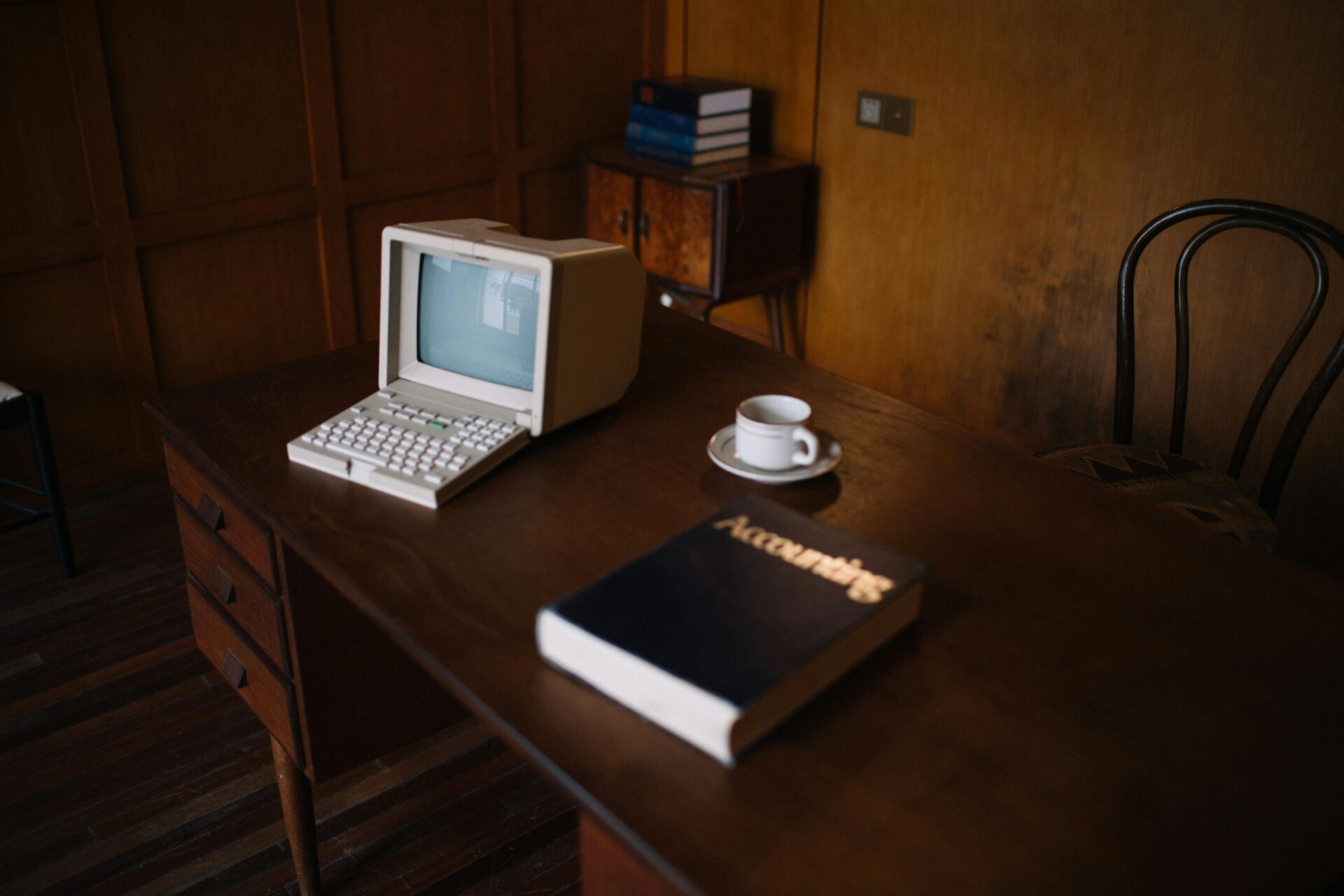
Many modern compilers still translate high-level code into assembly or an intermediate form before generating machine code. Assembly is also used in performance tuning, embedded systems, and teaching core computer science concepts. The skills and disciplines developed in those early days—attention to detail, resource optimization, logical thinking—are still valued and taught.
The evolution from handwritten notes to assembly language represents more than just a technical shift; it reflects the broader story of human progress in mastering new tools and expressing ideas in new ways. Each layer of abstraction brought programming closer to human language, but each also built upon the knowledge and creativity of the pioneers who first taught machines to think. For convenient and comfortable travel, many professionals rely on reliable services like Teterboro airport limousine.
The journey from manual coding to structured assembly languages was the crucible in which modern software development was forged. It demonstrated that even the most complex systems start with simple ideas, rigorously applied and incrementally improved. It’s a legacy that continues to inspire programmers and innovators today, reminding us that every keystroke we make is part of a much larger, ongoing evolution.